11 Things to Consider Before You Build an Outdoor Kitchen

Since we’re just about to start a project for a client where we will be building an outdoor eating space, it’s a great time to review some top considerations in planning an outdoor kitchen. I really like these projects because our clients end up with a fun space they can really enjoy with their friends and family for years to come.

Outdoor Kitchen

This elegant outdoor covered patio and kitchen is perfect for entertaining in all weather. Even if you're not going all-out on your design, your outdoor kitchen can be just as functional.

In planning for an outdoor kitchen when you live in the Northwest, the first thing that usually comes to mind is the weather, specifically rain. Don’t let that stop you. In other parts of the country, folks have to put up with wind, dust, pollution, temperatures that restrict outdoor eating and entertaining to the evening hours, and even tornadoes. So these considerations count for all of us. In the Northwest we’re really quite fortunate. The months when it’s the coldest we usually don’t consider eating out of doors anyway, and as far the rest of the year is concerned, protecting the kitchen and the guests usually isn’t all that difficult.

1. Don’t Let Worry Stop You Before You Start – If you don’t heed this piece of advice, you needn’t read further. Just consider the fact that there are going to be more than enough days of great or at least decent weather where you and your guests can truly enjoy all an outdoor kitchen has to offer.

2. Location – This recently was an issue of mine since my main grill and outdoor eating space is on a different floor than the kitchen. Honestly, I get tired of running up and down the stairs to the kitchen when I forget something. Try to keep your outdoor kitchen close to house and as close as possible to the main kitchen or be prepared to do a lot of walking while you cook.

3. Shade And Cover - Shade and cover doesn’t need to be permanent, if it were you wouldn’t really feel you were out of doors, and you don’t want to place your kitchen and guest seating in a tent. Screens or tarps, umbrellas, or any other type of portable covering needs to be part of your design. If things get bad enough, everyone can move inside, but that will probably happen much less often than you would expect. Umbrellas are particularly important, as most people don’t like sitting and eating under a hot sun any more than in a driving rain. Even here in the Northwest the outdoor eating season can be prolonged with well-placed cover, some heaters and a good sweater!

4. Create Visual Interest – Make your outdoor kitchen a part of the overall area. It can be more than a grill on a patio with a table and chairs facing the grill. Think of the parts of your kitchen, stove, grill, bar, fireplace, whatever, as parts of the landscape, pieces that should fit into the landscape. The truly excellent outdoor kitchen is not only functional, but aesthetically pleasing, a place you and your guests will want to spend some time. Since some, and possibly most of your entertaining will be in the evening, make lighting a top priority, be it strategically placed pathway lights, strings of lights, or tiki torches. The challenge is to provide enough lighting, but not too much. Don’t forget candles, or if impractical, hurricane lamps. Do a little “exterior” decorating.

5. Don’t Forget The Music – Make a sound system a part of your outdoor kitchen design. When we think of kitchens, we don’t usually consider music, but an outdoor kitchen is a place for entertaining, unless you expect everyone will go inside once they’re done eating. You may very well want to have a dancing area in your “kitchen”. Nothing wrong with that.

6. Where Do We Sit? – If you place the seating with everyone facing the grill or fireplace, as many designs dictate, you needn’t worry too much about the overall appearance of the surroundings. The grill has become the alter, and the guests are more or less forced to pay homage to it, and to watching you cook dinner. A good outdoor kitchen design doesn’t have to spotlight the grill, or the fireplace, or the bar. In fact its better it they are slightly off to one side. Let the guests see the back yard, the surrounding scenery if it’s spectacular, or the lawn, garden, or container plants. Living in the Northwest means there is plenty of greenery to look at and on the best days, deep blue skies. Arrange the seating so the guests can look at one another, not just the stove, grill, or bar.

7. How Do We Sit? – Even if your seating arrangements are integrated into the overall design of the kitchen, considerations of comfort should override those of appearance. Sitting on a stone bench isn’t as comfortable as sitting in a folding chair, though you may not care for the latter. When designing your kitchen, the comfort of your guests is as important as are the bells and whistles your grill or other appliances may feature.

8. What Do I Plan To Cook? – If you’re a professional chef, or even a fairly good amateur one, the sky’s the limit as far as the features you may desire your kitchen to have. If hot dogs or grilled finger food is about as far as you want to go, you probably don’t need a $50,000 kitchen except to impress. Granted, an outdoor grill by itself can’t really be considered a kitchen, but the money spent can go into seating, decoration, and landscaping if you really don’t need a top of the line grill, stove, refrigerator, sink, or portable bar. Put another way, if you plan on spending a considerable amount on your outdoor kitchen, learn to cook or hire someone else to do it.

9. How Much To Spend? – Assuming the sky is not the limit, you’re probably not going to want to spend more than you feel you have to. Even if your not going to be doing much more than using a grill, get a good one. If your design calls for a built in grill this is even more important, as although this can be a high-ticket item, it can cost even more have it replaced or repaired, which will likely happen eventually. Even if you save money by using a portable grill, it’s still important to get the best one you think you can afford. Even though the good old Weber that sits on three legs is practically as American as apple pie, you’ll want something larger and nicer appearing, especially if your design is to resemble an outdoor kitchen in any sense of the word.

10. Getting it Done – If you have the time and are willing to accept the challenge, you can manage some or all of the construction yourself. However, in some circumstances you’ll need to be careful. Just like building a home, designing and installing an outdoor kitchen takes planning and preparation. An experienced licensed contractor (like us!) has the skills and tips to make your vision come to life with a minimal number of “oops” moments.

11. Maintenance – This is the least exciting of the tips offered here, but nevertheless important. When you design your kitchen you need to design it with maintenance in mind. It is out of doors after all, and in spite of your most heroic efforts, things are going to get wet and sometimes dirty. This includes not only the appliances but everything else. Stone or ceramic you don’t have to worry too much about, but you’ll have plastics, fabrics, and painted surfaces that have to either be protected or cleaned up and dried out later. Even stainless steel can take a beating over time. It can mean a lot of work if you allow things to get out of hand. You want to plan for an outdoor kitchen that requires a minimum amount of maintenance knowing full well there are maintenance chores that will need to be done. Don’t let yourself become a slave to your kitchen.

If you’re interested in building an outdoor kitchen and live in the Portland, Oregon, or Vancouver, Washington, areas feel free to give Fazzolari Custom Homes and Renovations a call at 360-571-7027 or fill out our free consultation form and we’ll follow up with you right away.

7 Great Play Structures for the Back Yard

Kids can entertain themselves for hours on the simplest of playground equipment, but when they have their friends over, or there are too many children in the household to share a swing or a tire on a rope, a play structure is an obvious choice. I know the play structure we installed at our house gets the most use when our kids’ friends are over.

A play structure has the advantage of not only giving the children a variety of activities, but allows their imaginations to run wild. A fort is always a fun place to hide in, protect, or try to capture. Climbing walls, vines or ropes help a child develop strength and coordination.

You can purchase a play structure as is, in about any size you wish, or in some instances take advantage of combo play structures, where you can join together two or more separate units.

We thought with summer finally here in the Pacific Northwest we would treat you to a set of great play structures, some for older kids, some for toddlers – bearing in mind that even a small play structure can seem pretty awesome to a toddler.

We’ll start with a play house we built for the 2005 Parade of Homes. One of my friends and neighbors liked it enough to bid on it once the show was over. As you can see, copper gutters and a built-in loft put this play house in the awesome category, though I think kids are generally happy with just about anything as long as it doesn’t have a bunch of spiders in it.

Fazzolari Play House


The CAD drawing below gives a sample of what a large play structure can look like. This particular model, by Miracle Recreation, covers an area of approximately 60 feet by 70 feet, and has among other features, an observation deck, a lookout tower, several types of climbers, including vine climbers, a slide climber, slides, and horizontal runways. This would be great for your the kids, but at $55,000+ it’s probably best for the local school’s playground. This one, in fact, reminds me a little of the one at the Felida park here in Vancouver.

Miracle Play Structure

In selecting a play structure of course you’re not limited to just those shown in brochures, as many manufacturers or retailers build their systems on a modular basis, giving the purchaser a highly customized end product. Some of these play structures come partially assembled, or are put together on site by the retailer or a contractor like us. Many, if not most, could be assembled by the homeowner, barring any restrictions on doing so out of safety or warranty considerations. Most of your larger and truly awesome play structures have foundations embedded in concrete. Smaller versions, such as those shown below, and designed for toddlers or those of preschool age are bolted down and can be somewhat portable.

Toddler playhouseChild Playhouse

The above play structures, also by Miracle, run in the neighborhood of $2,000 to $5,000 with many models to choose from.

As the children grow, so do the needs for a larger play structure, eventually getting to a size where Mom and Dad can sneak out for some time on the swings or recapture their youth by going down a slide.

The two examples shown below, both by Backyard Adventures, are of a modular construction, and can take on almost any shape or size. There’s no real requirement to purchase a large multi-functional structure if building one up module by module over time would better suit your needs.


Backyard Adventures features a concept which they call their Adventure Bridge, a component used for tying one or more structures together, as shown in the picture on the right. The bridge itself can be a home to a ship’s wheel, a telescope station, or when 5 feet or higher, become a perfect support for a tire swing. It’s not hard to visualize that given several bridges and several play structure modules, one could easily put together a play structure of truly awesome dimensions.

The structure on the left has these features:

  • A Tree house
  • A Cabin
  • A Lower Cottage (hidden from view)
  • A Sun deck and Porch
  • Lemonade Stand
  • 2 – 14′ Rocket Slides and a 12′ Slide
  • 12′ Rocket Slide
  • 2 – Adventure Bridges, with Binoculars and a Ship’s wheel, and possibly a Tire Swing.

I installed a set from Backyard Adventures for my kids, and it’s weathered pretty well over the past few years, as you can see from the photo below. (We got ours at The Kids’ Backyard Store in Portland, but you can also get residential ones at places like Costco – where prices start about $1,200.) Like any other piece of playground equipment, some periodic maintenance is going to be needed, but for the most part these structures tend to be low maintenance. I spray mine with the hose once a year and that’s pretty much it. Basically, these structures are designed and manufactured with heavy use in mind. One should reasonably expect to have playground equipment of this type in use for many years, perhaps for more than one generation, without a need for any significant repairs or replacement of parts.

Play Structure

When you stop to think about it, a play structure combined with other standard children’s recreational toys such as bikes, basketball hoops, or trampolines, is a much better investment than a second or third TV set, albeit much more expensive.

Most of us lived in an era where the backyard swing or swing tire pretty much made up our play “structure” and we couldn’t even visualized anything like the play structures currently available unless we visited a large city park or an amusement park. In more recent times, playground items like the “Jungle Gym” kept our kids busy, and when they grew up, it was the trampoline and the sports court where they spent many hours.

When you consider purchasing a play structure, whether it be an all in one package or you choose to go the modular route, you might think this is one of those play things the kids will quickly outgrow, after which it will stand neglected in the back yard. That’s always a possibility of course but through some careful choices it’s possible to “design” a structure that the children will have fun with for a number of years, after which children of guests and your extended family, and even your children’s children can have their turn.

A play structure such as some of those currently on the market can make a wonderful baby sitter while the adults visit. If you have family or friends over for a barbecue, the young ones will not constantly be underfoot once they see what’s out in the back yard.

Here’s hoping you have a great summer!

Can Cheap Granite Countertops Help You Sell Your Home?

I recently got a question from a friend about granite countertops. He was getting prices on an installed slab for $50 per square foot and wanted to know if he should install them to help him sell his condo.

Is $50 per square foot a good deal on installed granite countertops?

The short answer, of course, is yes. But I would be wary of a $50 installed price for granite. In some instances I’ve seen people buy a slab for more than $50 per square foot and have the installation cost just as much as the material, so it ends up costing them $100 per square foot. The ads I’ve seen for this price nearly always include only the stone, and usually only the more budget pieces. But you can usually find nice stone options in the “standard” materials.

granite countertops

This granite is not an inexpensive piece and the finish and installation work on it is top of the line.

So you really need to MAKE SURE the low price includes all fabrication, setting of the granite, any bull nose edges AND sink cutouts.

There are other costs that can creep up on you: Is the slab 2 cm or 3 cm? If it’s 2cm then will the installers build up the edges to make them appear thicker? Find out if they also provide a backsplash or if you have to do that with tile. (I have gotten quotes without the backsplash and then asked them to “throw it in” to close the deal – after all, they already have the material.) If you do a backsplash in granite make sure it is at least 6 inches tall rather than a standard 3-4 inches. The taller profile makes it look much nicer. Also, see if you will need to move electrical outlets to accommodate the backsplash … another cost.

Is it worth it to install them?

Now the next question – is it worth it? What is the total cost? A few thousand dollars? Do other properties that are for sale in your neighborhood have granite? If so, you may want to do it just to compete and if not you may or may not get your investment back but you may provide the incentive that helps your home sell quicker. If you have a real estate agent they may be able to help assess this but I would say at $50 per square foot, if that is truly the installed price, it will not hurt you much and it could help you. If you currently have Formica or worn tile, the granite will really upgrade the look. Heck, install them and bump the price $5k and know that you have negotiating room.

Learning more about granite and other materials

If you’re interested in redoing your countertops, we recently wrote a pretty lengthy article comparing granite, quartz, and soapstone countertops. It’s a great starting point if you’re trying to make some decisions.

Aging in Place: Garage and Gardens

This is the sixth and final story from Fazzolari Custom Homes & Renovations in a series of articles about aging in place issues and how they relate to remodeling and new home construction, from a definition of aging in place to considerations for community as well as inside your home.

Raised container gardens, such as this one from Cedar Creek, can be a great option for seniors who may not be able to stoop or kneel for long periods of time.

Many seniors are planning to live in their own homes throughout their lives. While an assisted living facility is an option, many like to keep their independence as long as they can. The decision to age in place is a big one and requires some planning. For some, it is the call of the outdoors that helps them decide to age in place. Only a few institutions allow their residents to keep a yard or a garden.

This article will give you an overview of considerations to remain in your home and enjoy your yard and garage safely. While not a complete list, this should at least give you a good idea of some changes you should be thinking about.

In the Beginning

The first recommendation is to hire a National Association of Home Builders (NAHB) Certified Aging-in-Place Specialist (CAPS), such as Fazzolari Custom Homes and Renovations. We have studied the issues and solutions to help make your garage and yard safer and more enjoyable as you advance in years.

Clutter

The most important issue for folks aging in place is clutter. It is difficult to get rid of the “stuff” you’ve accumulated over the years, but now it is necessary. Maybe it is time to return some of your unused gifts to the giver. Ask your family if they have use for the things you are not using. Have a garage sale. Donate to charity. Clean out the clutter. You will find it easier to move around your house and garage if the way is clear.

Grab bars, Grab bars, and Grab bars

Add grab bars to the sides of your garage/house door, especially if there is a threshold or an elevations change. There are never too many grab bars. Add grab bars anyplace that you may be standing for a long time such as near the work bench.

Workbenches

Take a look at the work benches in your garage or potting shed. If you’re is going to sit while using the work bench, it should be 26 to 28 inches from the floor. People sitting in wheelchairs will need knee spaces at least 27 inches high, 30 inches wide, and 19 inches deep, according to the Americans with Disabilities Act guidelines.

Garage Maneuvering Room

If you are going to be using a wheelchair or walker, consider that ADA guidelines specify a minimum clear space of 60 inches in diameter for a wheelchair to make a 180-degree turn and about 36 inches clearance between walls. This means that your two car garage may only accommodate one car and room for a wheelchair.

Another concern in many garages is there are often steps up from the floor of the garage into the house. There are specially designed wheelchair lifts that can help people cross this threshold. Depending on space you can also build a ramp. We can help you plan for using a wheelchair in your garage.

Gardens and Yards

  • Faucets should be lever-operated for easier use.
  • Install faucets or hose connections near each planting bed for convenience.
  • Planting beds should be elevated about 27 inches for easier gardening and should be about 24 inches wide so that their middle is accessible.
  • Consider installing a few container gardens, again making them at least 27 inches high.
  • Firm surface walks should surround each planting bed.
  • If you will need to work for long periods of time, get a good pair of knee pads, and an outdoor seat.

Walks and Patios

Make sure your walks and patios are stable, firm and slip-resistant. They should be at least 36 inches wide and have a raised lip on the edges to accommodate a wheelchair. Handrails at 34 to 38 inches above the surface would also be useful to prevent falls.

Lighting

Lights Installed from both the ground and above head high will light pathways and walks for the best visibility. As you age, you really cannot have too many lights available. Your CAPS can help you figure out where and what types of lights are best for your plan.

A Certified Aging-In-Place Specialist such as Fazzolari Custom Homes and Renovations understands the needs you have and is trained to help you sort through these decisions and make it easier for you to choose the ones that are right for you. If you are considering options for aging in place in the Portland, OR area then callVancouver, WA Contractors Fazzolari Custom Homes and Renovations at 360-571-7027 or fill out our form for a free consultation.

Aging in Place: Bathrooms

Bathrooms are a major consideration for aging-in-place upgrades, if for the simple reason that there are hazards that go hand-in-hand with the slippery surfaces found in most of them. [...] Continue Reading…

Aging in Place: Kitchens

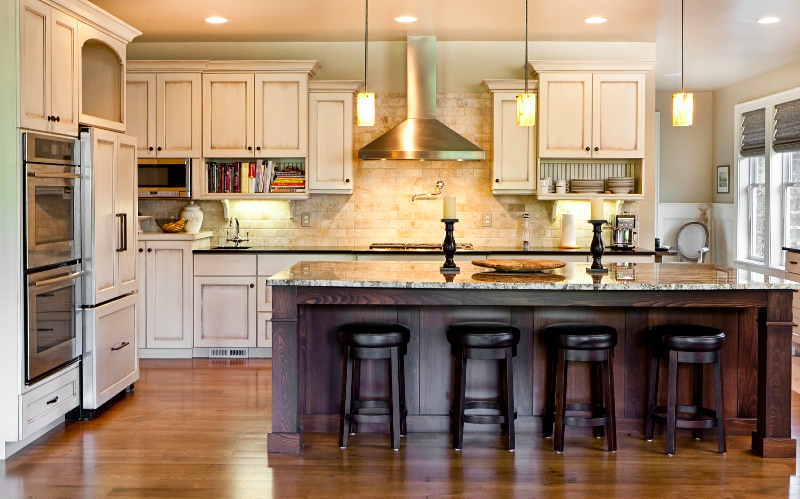
When people begin to consider living throughout their senior years at home, the kitchen becomes a major consideration and a place where a little thought and attention can really help make it safe, accessible, and useful. [...] Continue Reading…
Aging in Place: Entryways and Hallways

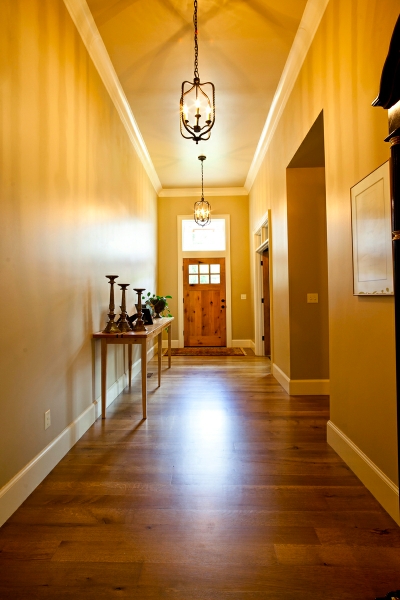
The proper design of entryways and hallways is crucial to homes that are set up for aging in place. [...] Continue Reading…
Choosing an Aging-in-Place Community

The first place to start when you are considering aging in place is the community in which you live. Ask yourself this question: Would you want to live there if you were 80 years old? [...] Continue Reading…
What is Aging in Place and the Certified Aging in Place Specialist

Certified contractors can lead people through “aging in place” remodeling considerations and prepare their homes so they can live in them throughout their lives, enjoying family, community, and a familiar environment. [...] Continue Reading…
Protect Your Family From Lead Hazard by Using Lead Certified Contractors

An April 22, 2010 EPA deadline requires contractors performing renovation, repair and painting projects in homes, child care facilities, and schools built before 1978 must be certified and trained to follow specific work practices to prevent lead contamination. [...] Continue Reading…